News & guides
Ghana White Label Air Conditioner Market: A Practical Guide for Small AC Dealers
2026-09-12
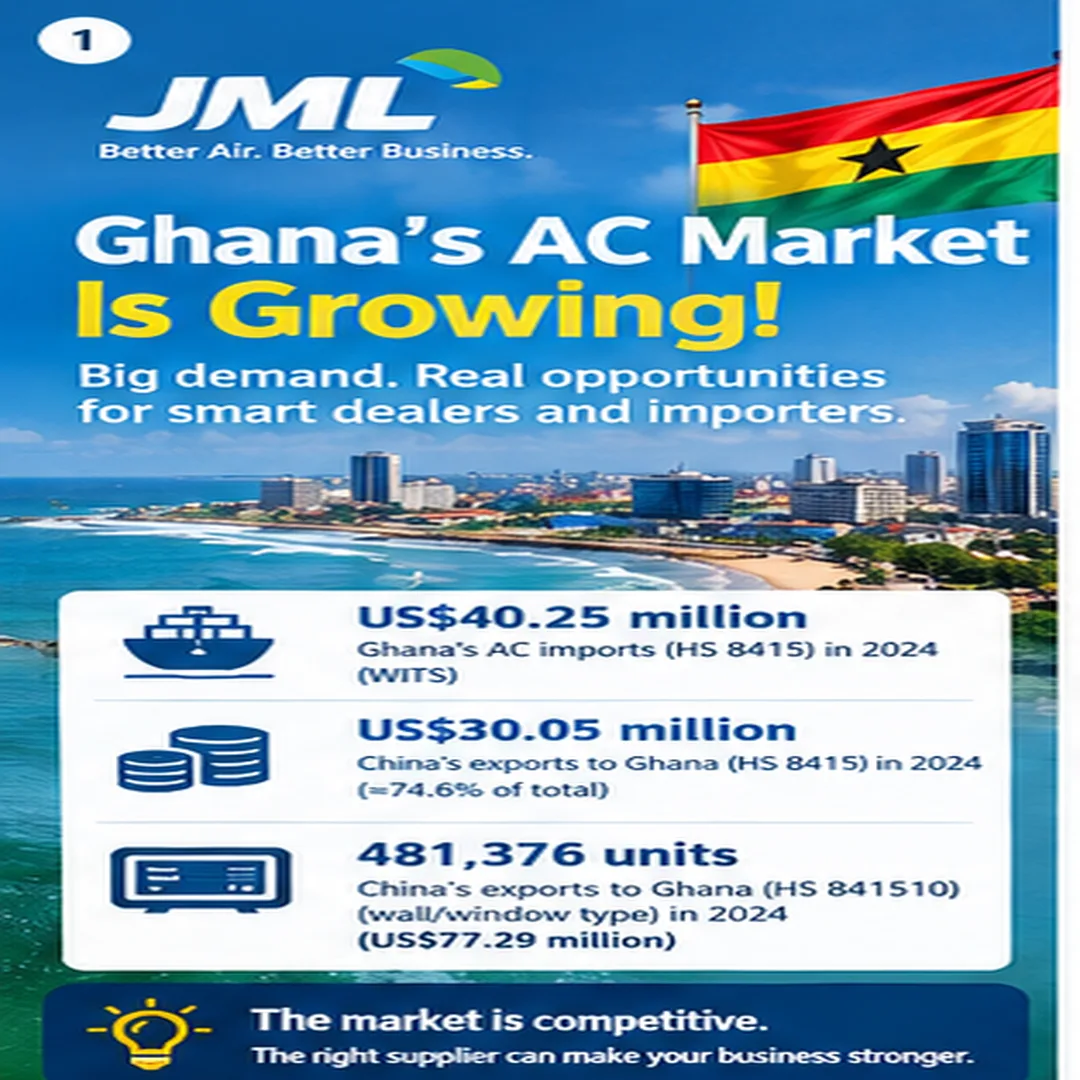
The Ghana AC market opportunity
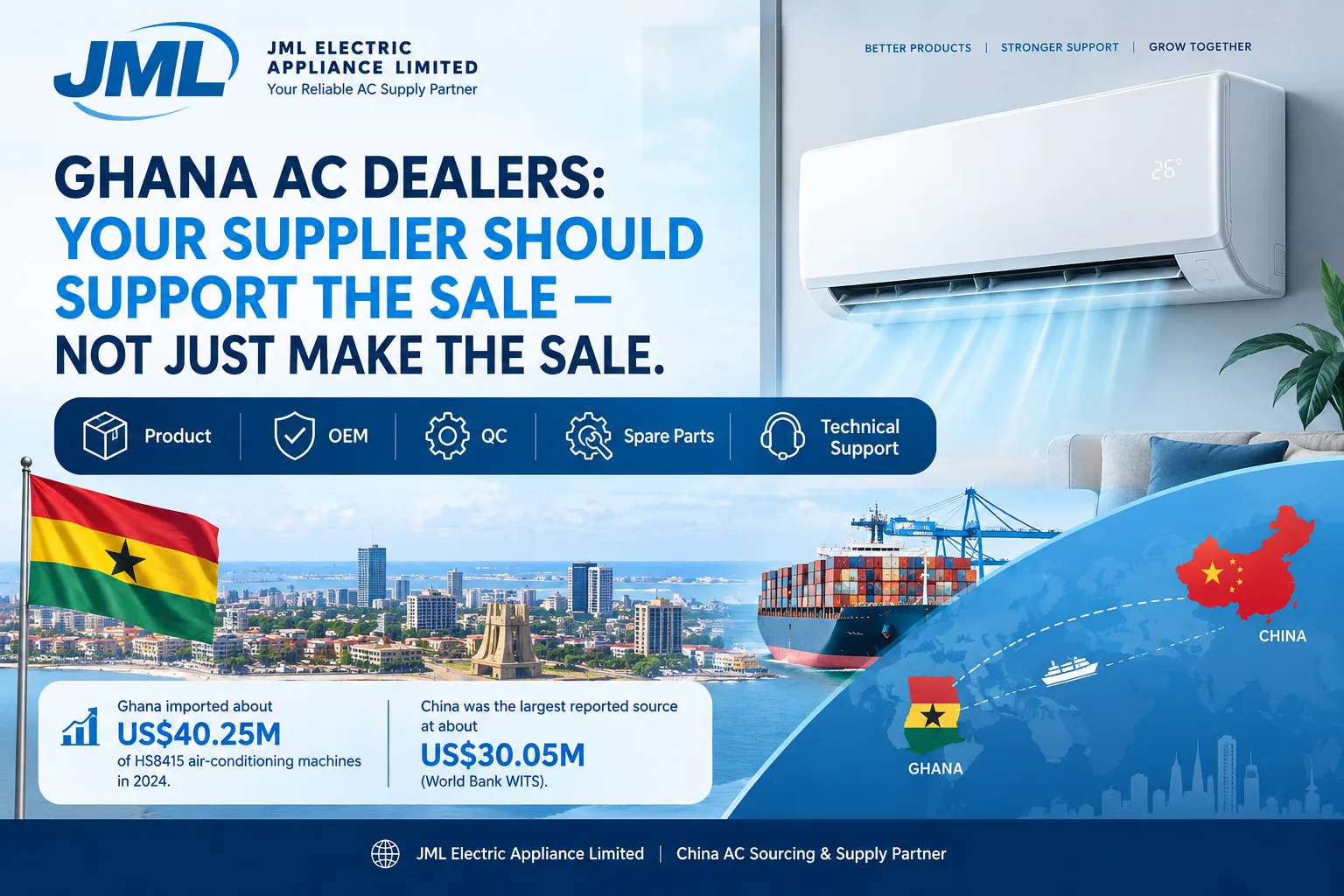
Ghana's air-conditioning market is increasingly diverse. Established brands compete alongside lesser-known, private-label and locally marketed products, while small importers, retailers, installers and online sellers compete for price-sensitive customers. The scale is real: in 2024 Ghana imported approximately US$40.25 million of air-conditioning machines under HS 8415, with China representing about US$30.05 million of that reported value. In the narrower HS 841510 category covering window/wall-type units, China's reported exports to Ghana were about US$77.29 million and 481,376 units. These figures should not be added together — the HS categories and reporting perspectives differ — but they show how central China already is to Ghana's AC supply chain.
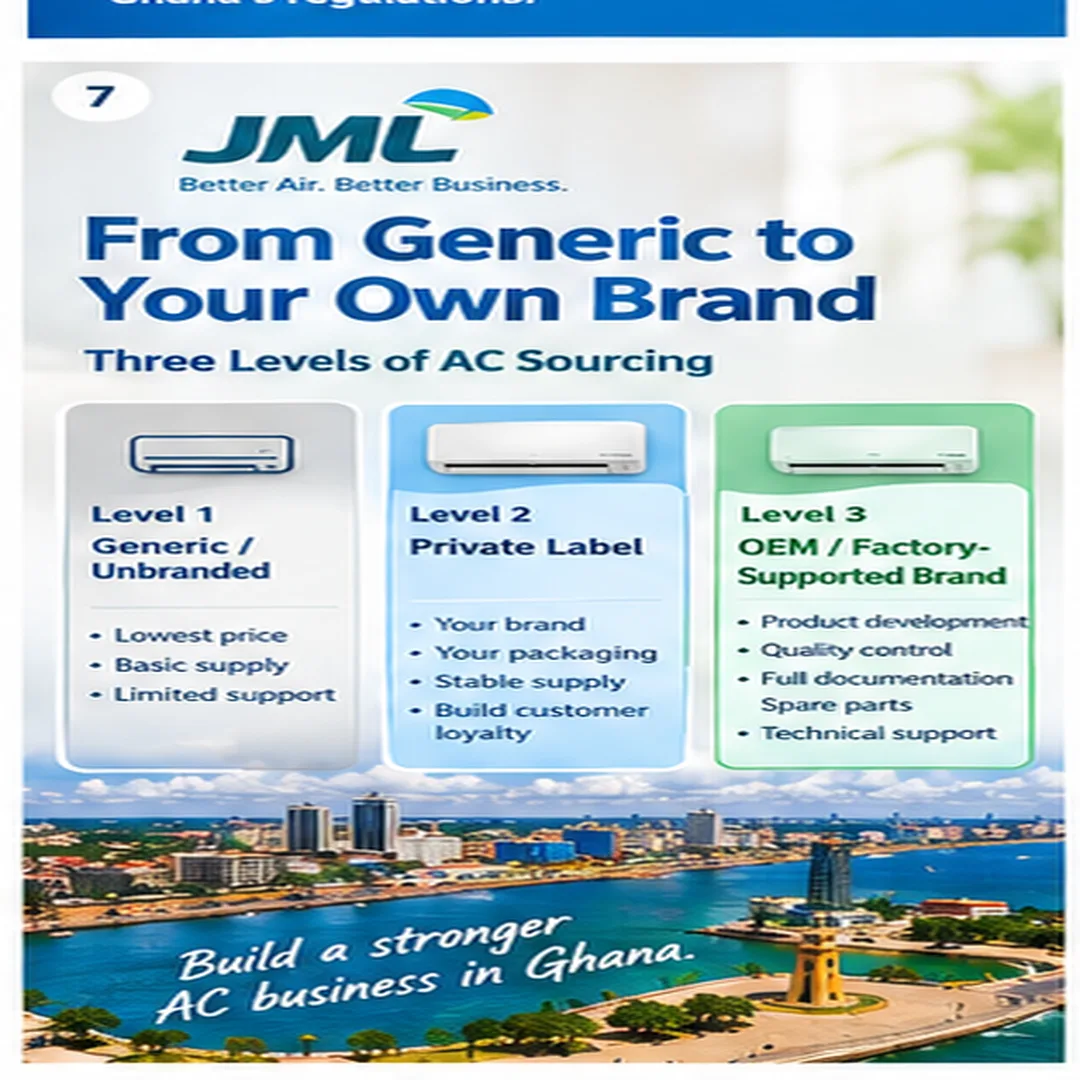
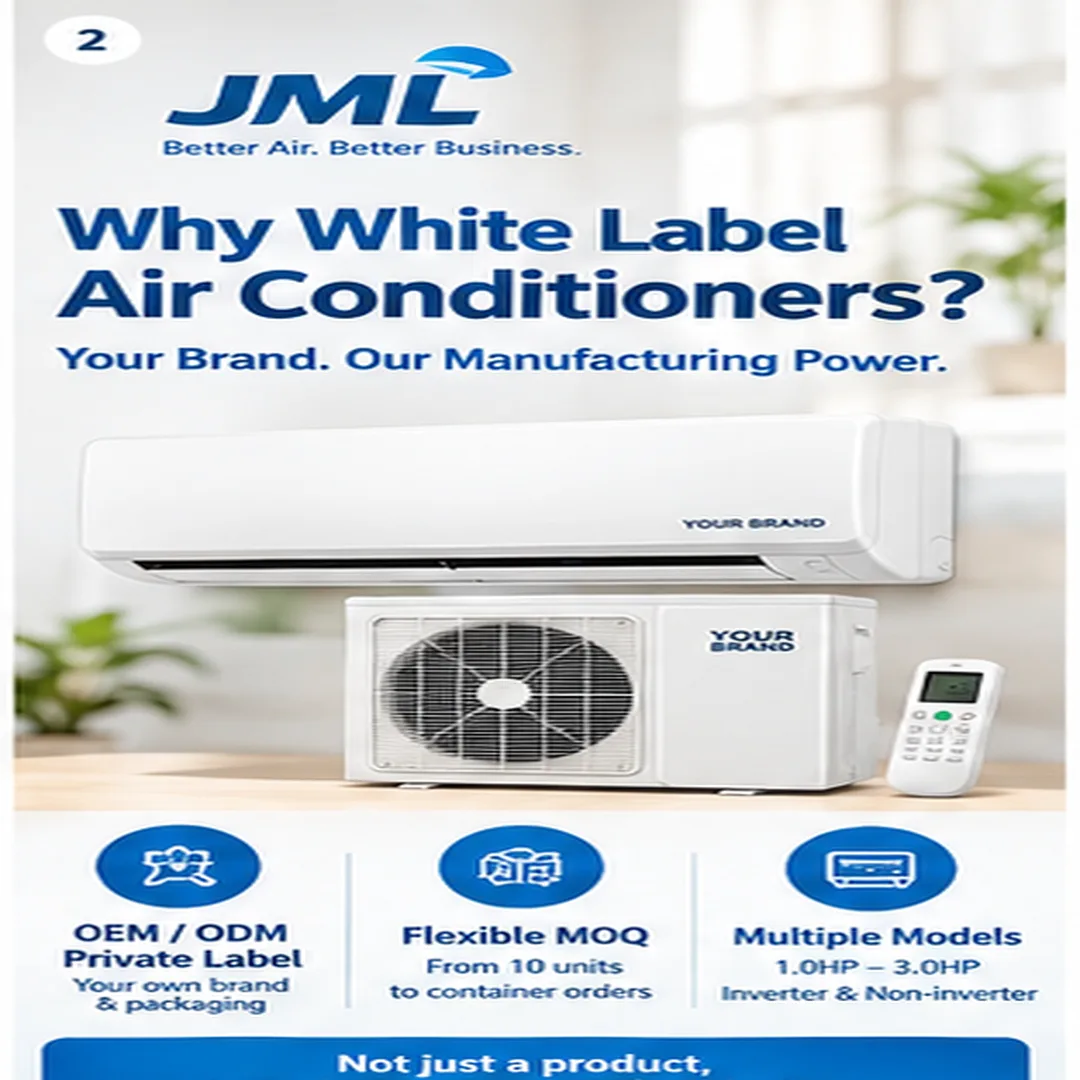
What does 'white label' mean?
In this article, white label refers broadly to air-conditioning products manufactured by a factory and sold under a different commercial identity. For a dealer, the model can range from generic products to a structured private-label or OEM program. White label describes the commercial branding and supply model — not an automatic level of quality. Quality depends on factory selection, specifications, QC and after-sales support.
Why a low factory price is not enough
A successful AC business includes purchase cost, shipping, installation, warranty exposure, spare parts, technical troubleshooting and customer support. A low-cost product can become expensive if the supplier cannot provide replacement components or technical information. Common after-sales needs — remote controls, PCB boards, fan motors, capacitors, sensors, compressors — are exactly where an unreliable supplier turns a 'cheap' sale into an expensive complaint.
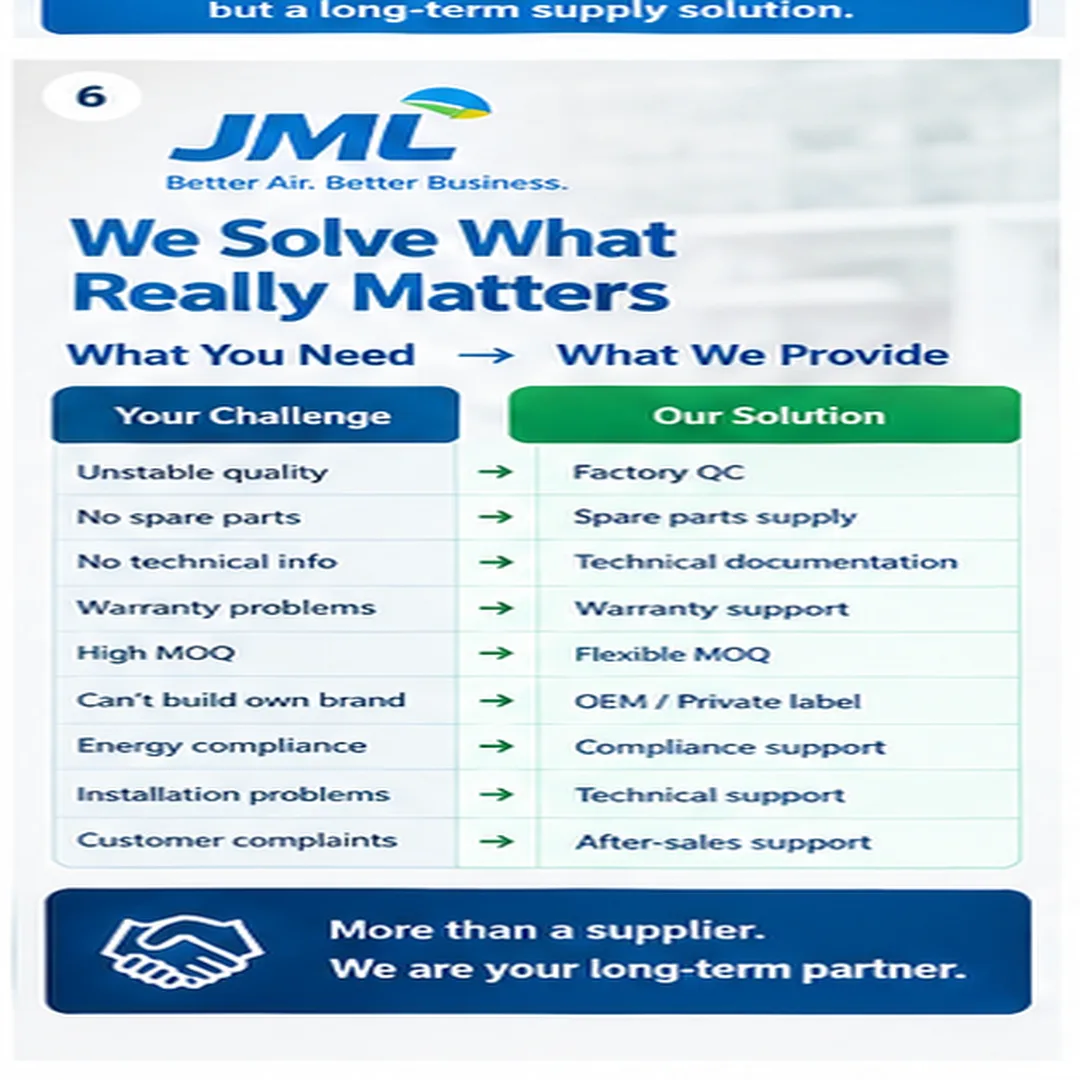
Spare parts are part of the product
Air conditioners are installed products. When a component fails, the dealer needs a practical route to diagnosis and replacement. A supplier that can plan spare-parts availability alongside the product order helps dealers reduce downtime and respond faster to customers. Spare-parts planning can therefore be as important as the initial product price.
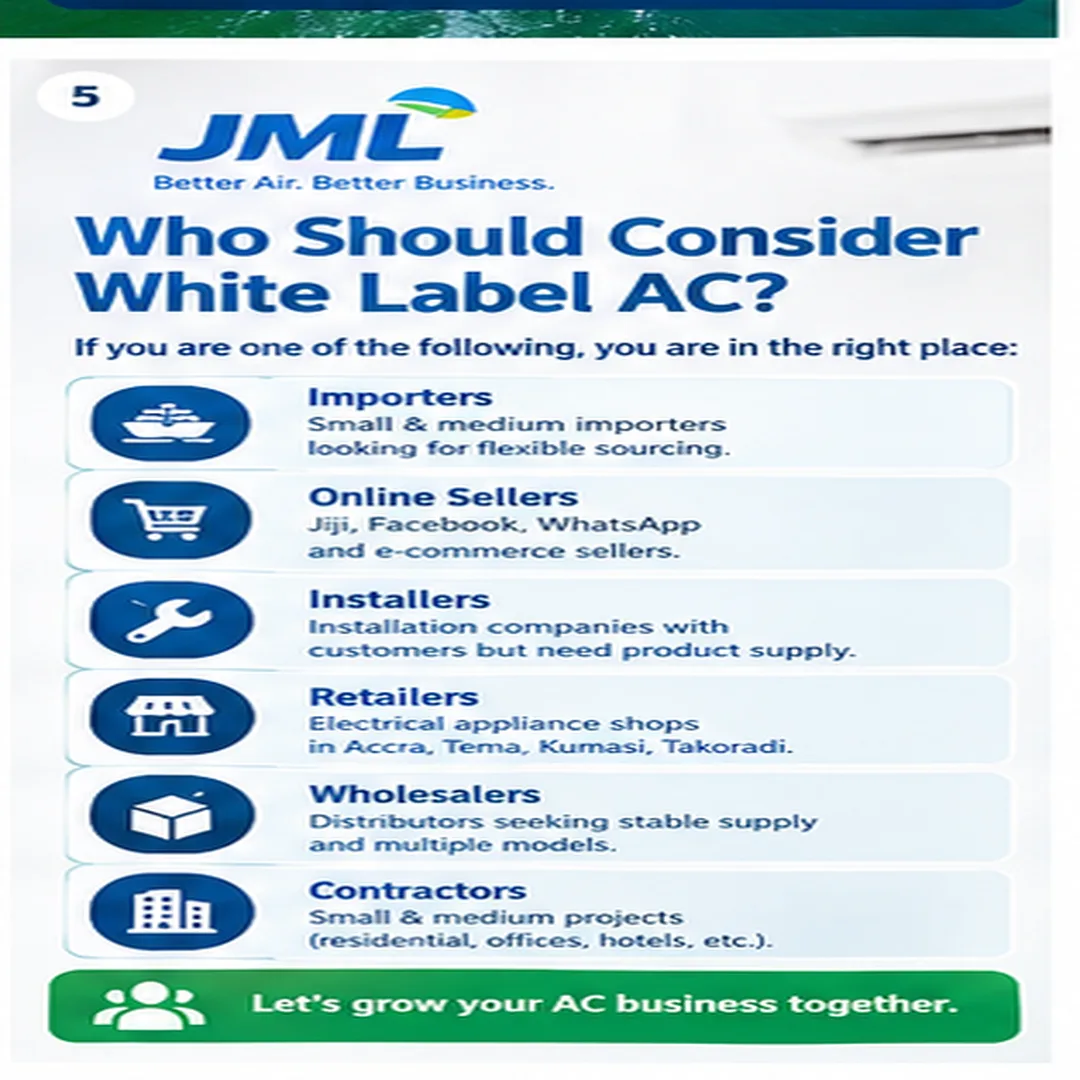
Who should consider private-label sourcing?
AC importers buying regular wholesale quantities; Jiji, Facebook and WhatsApp sellers; HVAC installers with an established customer base; electrical appliance shops; AC wholesalers and regional distributors; and small-to-medium contractors developing their own private-label range. If you compete on more than price, a structured supply program is worth exploring.
A practical private-label supply model
1) Select the right capacities and specifications. 2) Confirm factory capability and quality-control requirements. 3) Review compliance and technical documentation. 4) Develop packaging and branding if private label is required. 5) Plan spare parts and after-sales support. 6) Start with a realistic order quantity and build toward repeat orders. The right partner bridges the gap between a factory quotation and the day-to-day needs of a Ghanaian dealer.
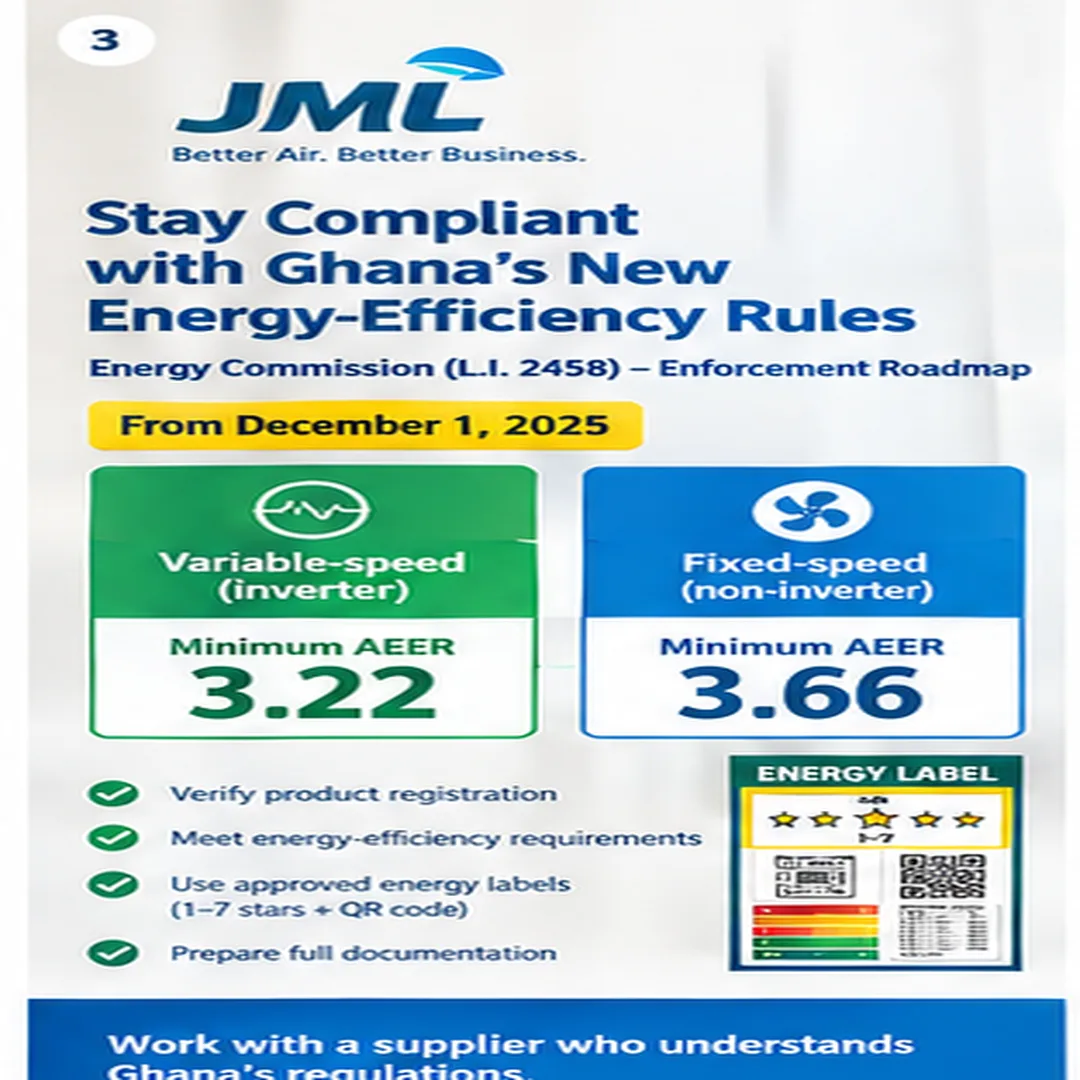
Ghana energy-efficiency and labelling requirements
The Ghana Energy Commission regulates energy efficiency and labelling for air conditioners. Under the Commission's updated enforcement roadmap, requirements for certain non-ducted air conditioners below 4kW include minimum AEER thresholds, with different thresholds for variable-speed and fixed-speed compressor systems. Importers should confirm the latest applicable requirements, product registration, efficiency information and labelling documentation before placing an order — not after the container arrives.
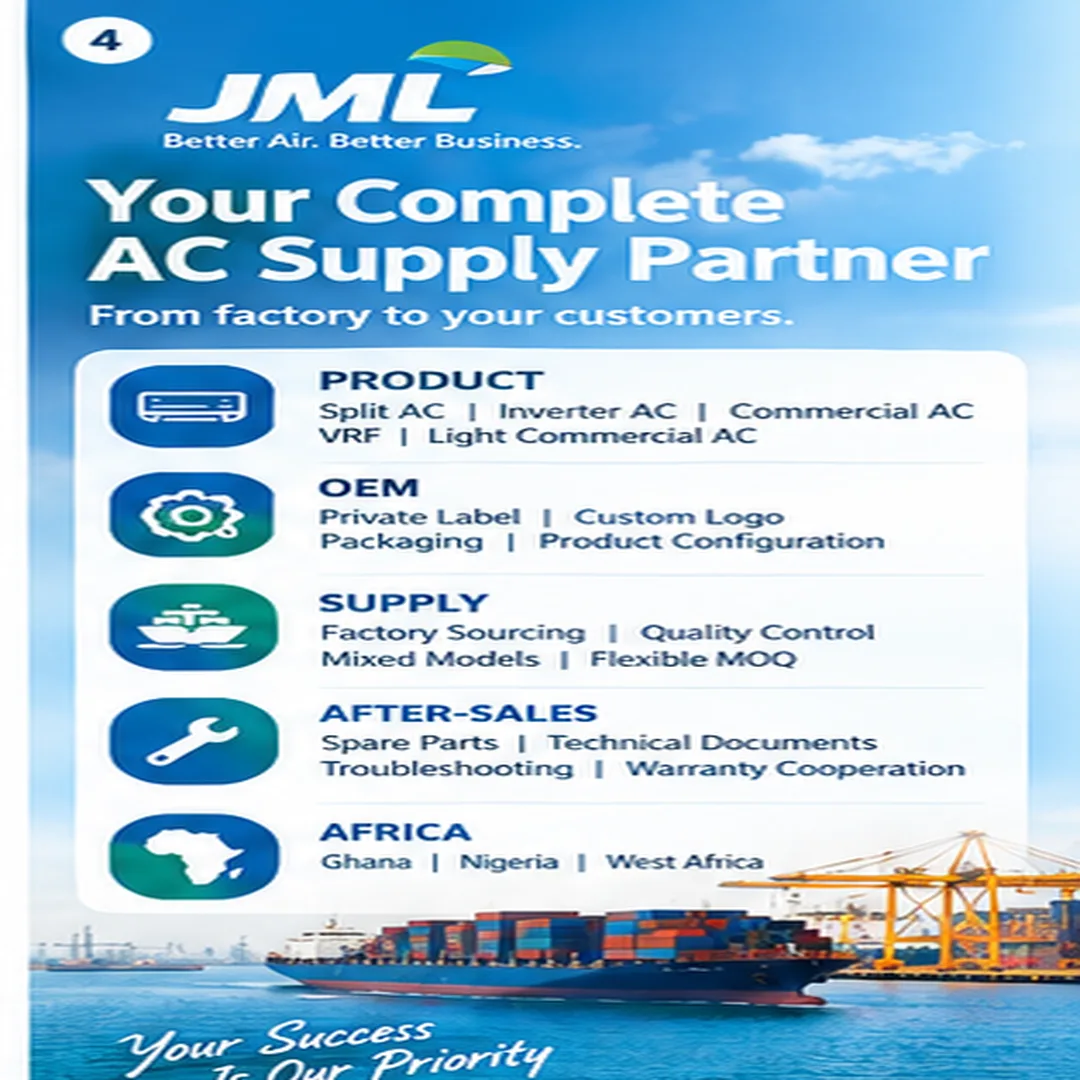
Why work with a sourcing and supply partner?
JML Electric Appliance Limited provides China-based air-conditioner sourcing and supply support for African buyers. We work with dealers and importers who need a practical supply solution rather than a one-time transaction. If you currently sell AC in Ghana and face inconsistent supply, spare parts, technical support or product continuity, we can discuss a suitable approach. Tell us your main AC capacities, current purchasing volume, target market and whether you are interested in OEM / private label.
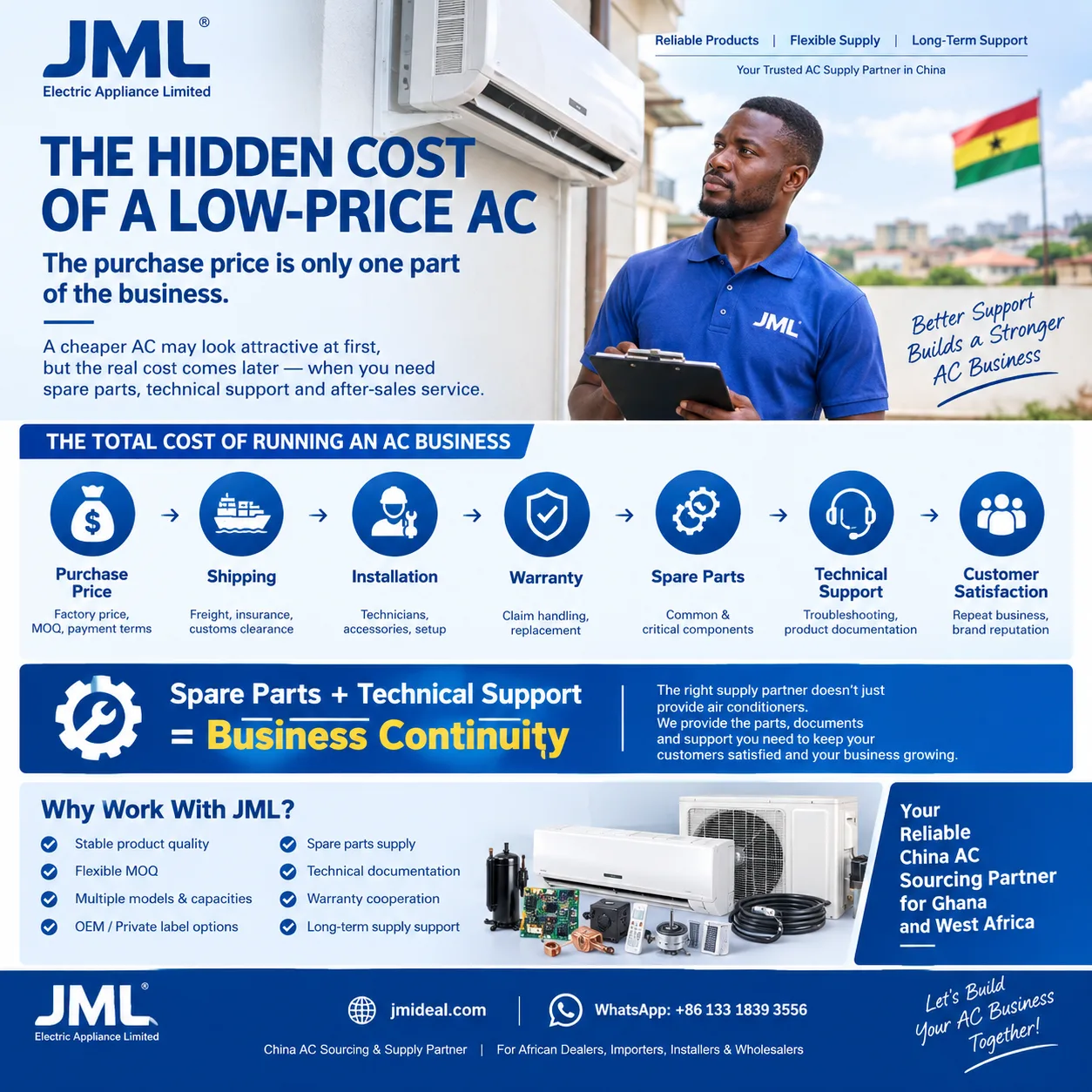
JML's Ghana supply offer at a glance
A single, structured China supply partnership — product selection, factory coordination, documentation, spare parts and ongoing technical communication — so Ghanaian dealers can build a repeatable AC business instead of chasing the lowest price.
Sources & editorial note
Key market figures are based on World Bank WITS / UN Comtrade data for 2024: Ghana reported approximately US$40.25M of HS 8415 AC imports (about US$30.05M from China); China's reported 2024 exports to Ghana under HS 841510 were approximately US$77.29M and 481,376 units. The two HS views are different statistical perspectives and must not be added together. Ghana's air-conditioner energy-efficiency and labelling rules can change; importers should verify the latest applicable Ghana Energy Commission requirements, registration, efficiency thresholds and labelling before ordering or publishing.
Ready to supply your shop with genuine Midea-manufactured AC?
Chat with JML on WhatsApp or request your dealer price.
CHAT ON WHATSAPP